DBFZ Annual Conference 2026: Biomass experts call for resilience and a clear framework for a circular bioeconomy
How is the use of biomass for materials and energy developing? What are the innovative research approaches, and what opportunities and challenges will the circular bioeconomy face in 2026? At this year’s annual conference of the DBFZ, held on 8–9 September 2026, around 160 experts exchanged views on exciting thematic research approaches and a wide range of ideas and aspirations, seeking answers to the questions raised. A recurring conclusion among participants from research, industry and politics was that, in view of growing geopolitical challenges at national and international level, there is an urgent need for simple, clear and long-term binding framework conditions.
In her Keynote, ‘Critical Cycles: Biomass, Security of Supply and Resilience in 2045’, Prof. Dr. Andrea Büttner from the Fraunhofer Institute for Process Engineering and Packaging (IVV) set out the thematic framework that ran through this year’s DBFZ Biomass Conference: How can biomass cycles be designed in such a way that both the goal of climate neutrality by 2045 and national security of supply are guaranteed? Against this backdrop, her presentation focused in particular on the aspects of ‘bioeconomy and biotechnology for sovereignty and crisis preparedness’ and ‘resilience of value chains’.
During a total of five thematic sessions held as part of the two-day annual conference, key issues such as the future availability and strategic use of biogenic carbon sources, the supply of renewable carbon to industry and energy systems, the contribution of biomass to a fully renewable energy system, the potential of bio-based negative emissions, and the strengthening of regional value chains and resilience. The programme for this year’s event was designed, to a greater extent than in previous years, to foster active discourse amongst participants from the worlds of science, business and politics. Specialist presentations, several panel discussions, an extensive poster exhibition, guided tours, company stands and networking events offered a wide range of opportunities for the exchange of ideas, discussions and networking over the two days of the conference.
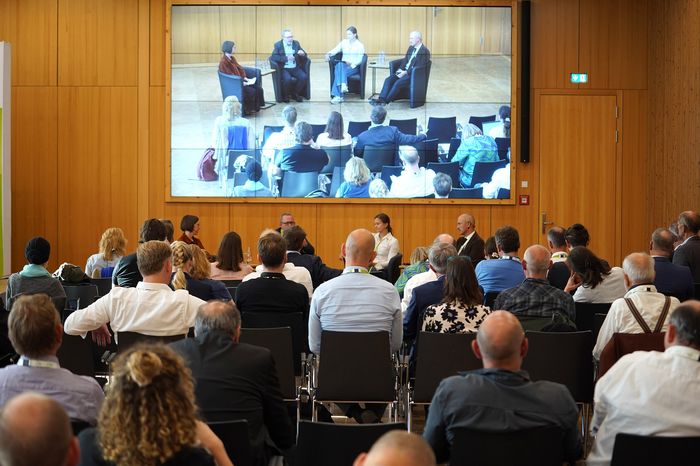
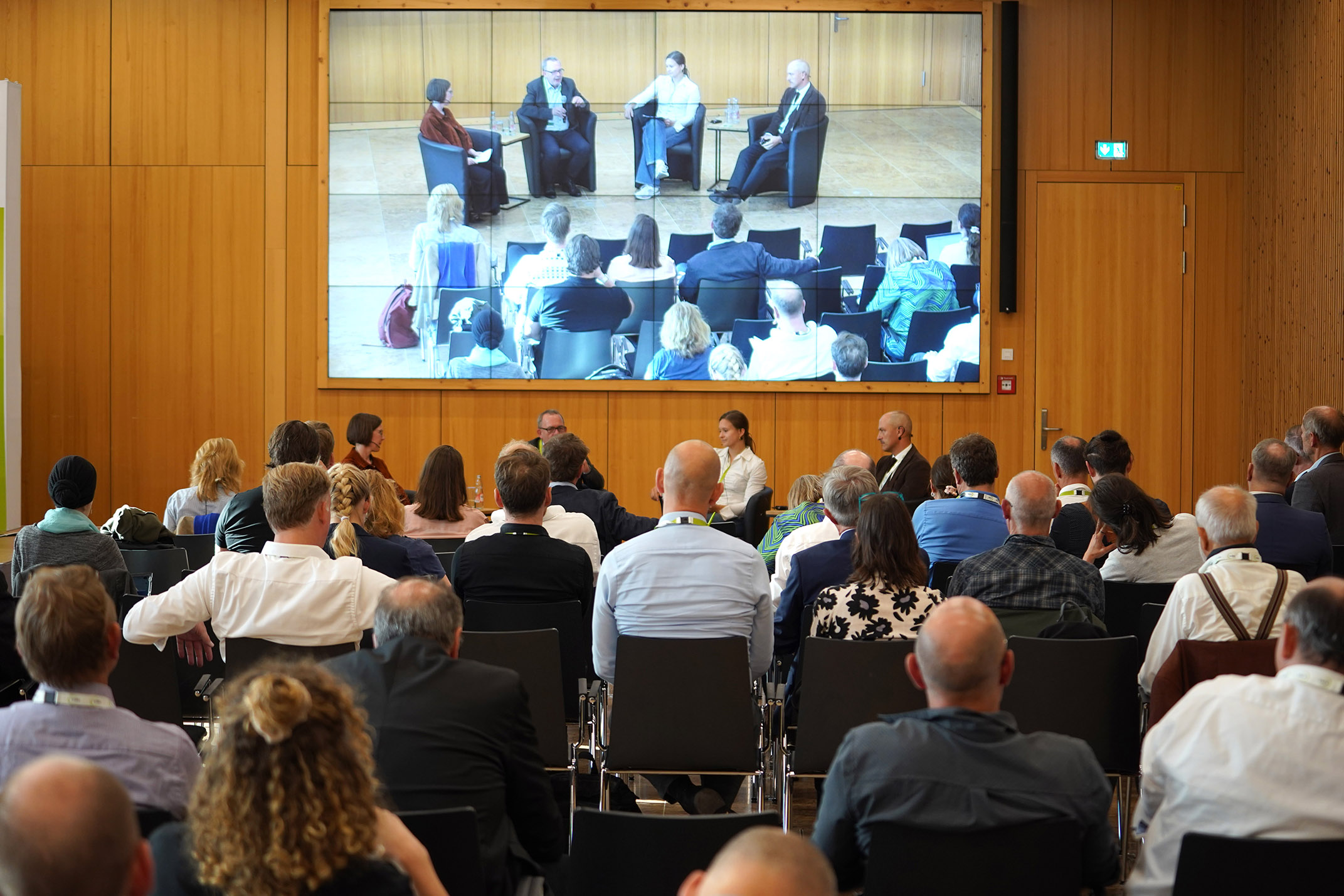
During the closing panel discussion ‘Biomass 2045 – Closing the Loops’, featuring Christian Weiser (Balance Erneuerbare Energien GmbH), Johann Meierhöfer (German Farmers’ Association), Jenny Stukenbrock (Cosun Beet Company GmbH & Co. KG) and Prof. Dr Michael Nelles (DBFZ/University of Rostock), a call was made for pragmatism and clear objectives were set out: whilst there are numerous forward-looking developments and processes, planning certainty and a reliable political framework are still lacking in many areas. Furthermore, the persistently high level of bureaucracy continues to significantly hinder the implementation of innovative solutions in many areas. Joint and unbureaucratic solutions to tackle the diverse challenges and take account of new developments are urgently needed in order to achieve greater resilience, resource efficiency and value creation, and to reach the major goal of climate neutrality by 2045, according to the urgent appeal from the panellists representing academia and industry.
"This year’s conference has once again impressively demonstrated the high standard of practice-oriented biomass research in 2026. Numerous innovative and forward-looking approaches were presented, which should now be consistently pursued and implemented in collaboration with industry. Germany has all the necessary prerequisites and capabilities to play a leading global role in the circular bioeconomy. However, we will only be able to hold our own against strong Asian competition, for example, if we put innovations into practice more quickly and, to this end, remove unnecessary bureaucratic obstacles,” said Prof. Dr. Michael Nelles.
The next DBFZ Annual Conference will take place in 2028; a conference proceedings booklet for this year’s event will be compiled shortly and made available free of charge on the DBFZ website. Further information is available at: https://www.dbfz.de/en/projects/dbfz-annual-conference
Smart Bioenergy – innovations for a sustainable future
The DBFZ works as a central and independent thinker in the field of energy and material use of biomass on the question of how the limited available biomass resources can contribute to the existing and future energy system with sustainability and high efficiency. As part of the research the DBFZ identifies, develops, accompanies, evaluates and demonstrates the most promising fields of application for bioenergy and the especially positively outstanding examples together with partners from research, industry and public. With the scientific work of the DBFZ, the knowledge of the possibilities and limitations of energy and integrated material use of renewable raw materials in a biobased economy as a whole should be expanded and the outstanding position of the industrial location Germany in this sector permanently secured – www.dbfz.de/en.