17th Expert Talk on ‘Particle Precipitator’: The technological standard is high, but demand remains too low
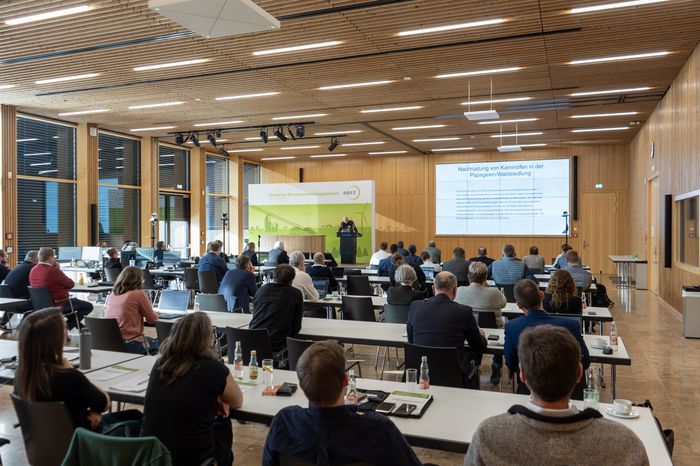
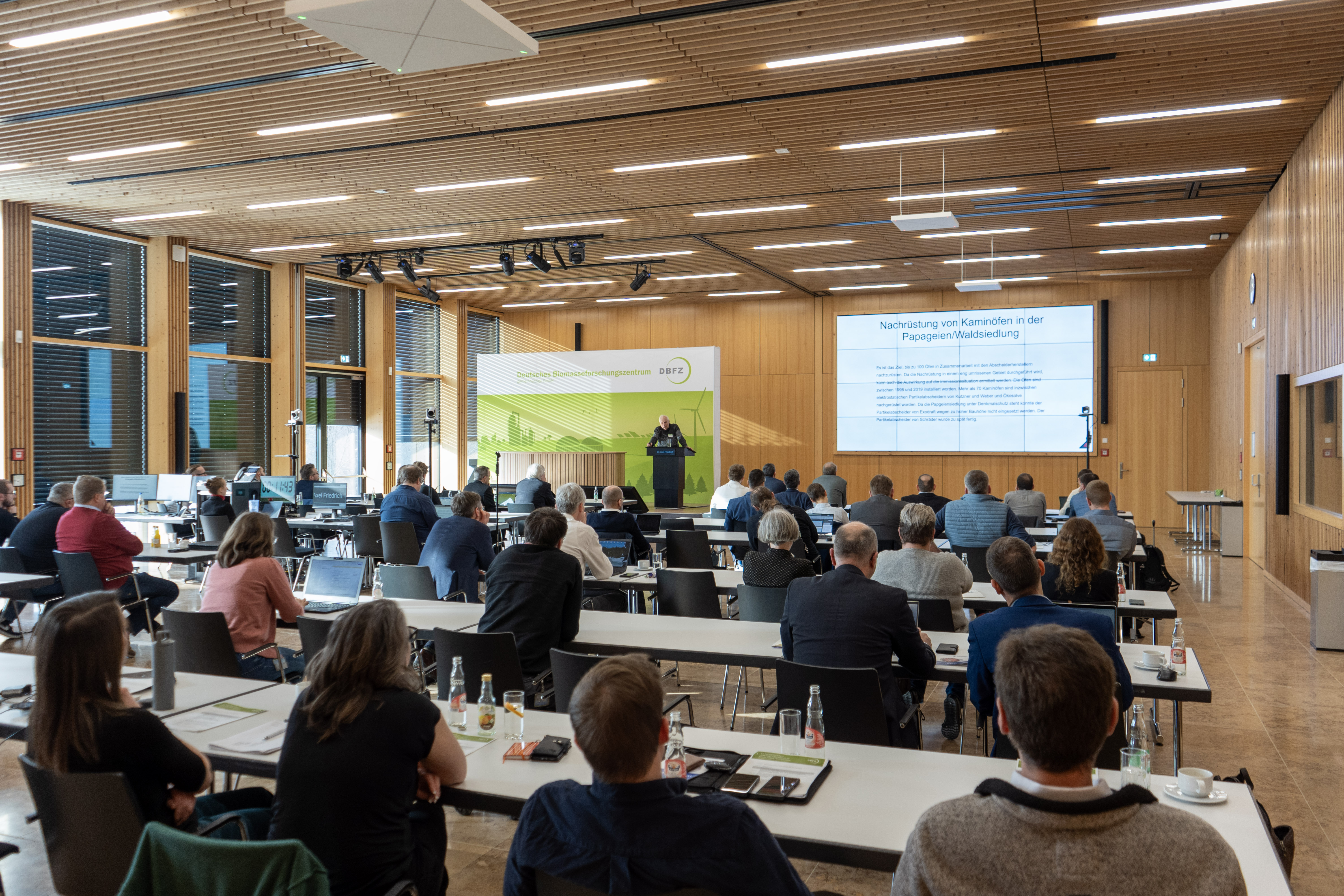
At the 17th expert talk on ‘Particle Precipitator in domestic combustion systems’, jointly organised by the DBFZ and the Technology and Support Centre (TFZ), more than sixty experts gathered on 4 February 2026 to discuss, among other things, the outlook for future European air pollution control regulations as well as catalytic and electrostatic emission reduction techno-logies. The participants' conclusions were mixed: the state of development of dust Precipitators is now very advanced, but the market penetration of furnaces with sophisticated separation technology remains low due to costs, and the necessary incentives are lacking, particularly in the area of single-room fireplaces.
This year, more contributions on catalytic emission reduction have dealt with gaseous emissions from single-room combustion than in the previous year. This shows that, in addition to ‘classic’ dust emissions, separation technology is also gaining importance in practice for gaseous pollutants. "There still appears to be a great need for scientific research into the effectiveness of catalysts in reducing secondary organic aerosols. For example, it is still largely unclear to what extent the health damage caused by particles from gaseous emissions can really be significantly reduced by using appropriate separation technology. This is an exciting field of research for the coming years‘, says Dr. Hans Hartmann from TFZ in Straubing, long-time co-organiser of the ’Particle Precipitator Expert Talk Series’.
In her presentation, Claudia Schön from TFZ also reported on the results of long-term monitoring of dust precipitatorsin the field, which were collected in the ‘LangEFeld’ project (Project number: 2220NR108A). The measurement results indicate that the separation efficiencies determined in the field are often significantly higher than those determined in accordance with the DIN/TS 33999 test measurement standard. As a consequence, this could result in potential for adapting the existing measurement standard.
One problem that became apparent at this year's symposium was that, despite many positive measurement results for downstream emission reduction technologies in single-room fireplaces, the market penetration of high-quality stoves with separator technology remains too low and insufficient for a significant reduction in costs. Even though there is still potential for optimisation in the area of standardisation of measurement methods and validations are still pending, the technology has proven its functionality. Now, according to the participants, a joint effort by all stakeholders is needed to increase market penetration, reduce costs and prevent possible bans on single-room fireplaces.
The conference reader for this year's event is currently being compiled and will soon be available to download free of charge. The next edition of the “Particle PrecipitatorExpert Talk” will take place on 24 February 2027 at the Technology and Support Centre in Straubing. Further information is available at: www.dbfz.de/abscheider.
Smart Bioenergy – innovations for a sustainable future
The DBFZ works as a central and independent thinker in the field of energy and material use of biomass on the question of how the limited available biomass resources can contribute to the existing and future energy system with sustainability and high efficiency. As part of the research the DBFZ identifies, develops, accompanies, evaluates and demonstrates the most promising fields of application for bioenergy and the especially positively outstanding examples together with partners from research, industry and public. With the scientific work of the DBFZ, the knowledge of the possibilities and limitations of energy and integrated material use of renewable raw materials in a biobased economy as a whole should be expanded and the outstanding position of the industrial location Germany in this sector permanently secured – www.dbfz.de/en.