The ‘ETH-Soil’ project in Ethiopia builds resilience and creates economic incentives through sustainable fertiliser production
Biochar-based fertilisers benefit the climate, the environment and soil health. The “ETH-Soil” project, coordinated by the DBFZ, the german institute for biomass research, is contributing to the development of a sectoral innovation system for organic fertilisers in Ethiopia through transformative research. After five years, Ethiopian smallholder farmers are now receiving financial compensation from carbon sink certification for the first time. The project’s outcome is a positive example of resilience, autonomy and economic progress against a backdrop of recurring crises and supply chain shocks, such as those recently triggered by the conflicts in the Black Sea and the Gulf region.
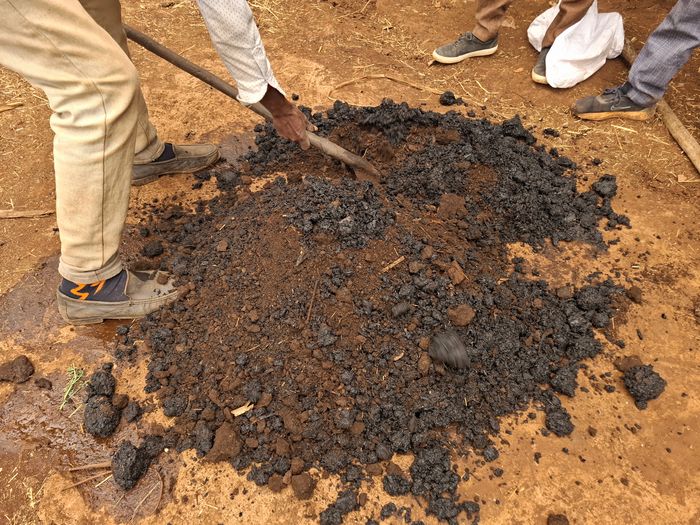
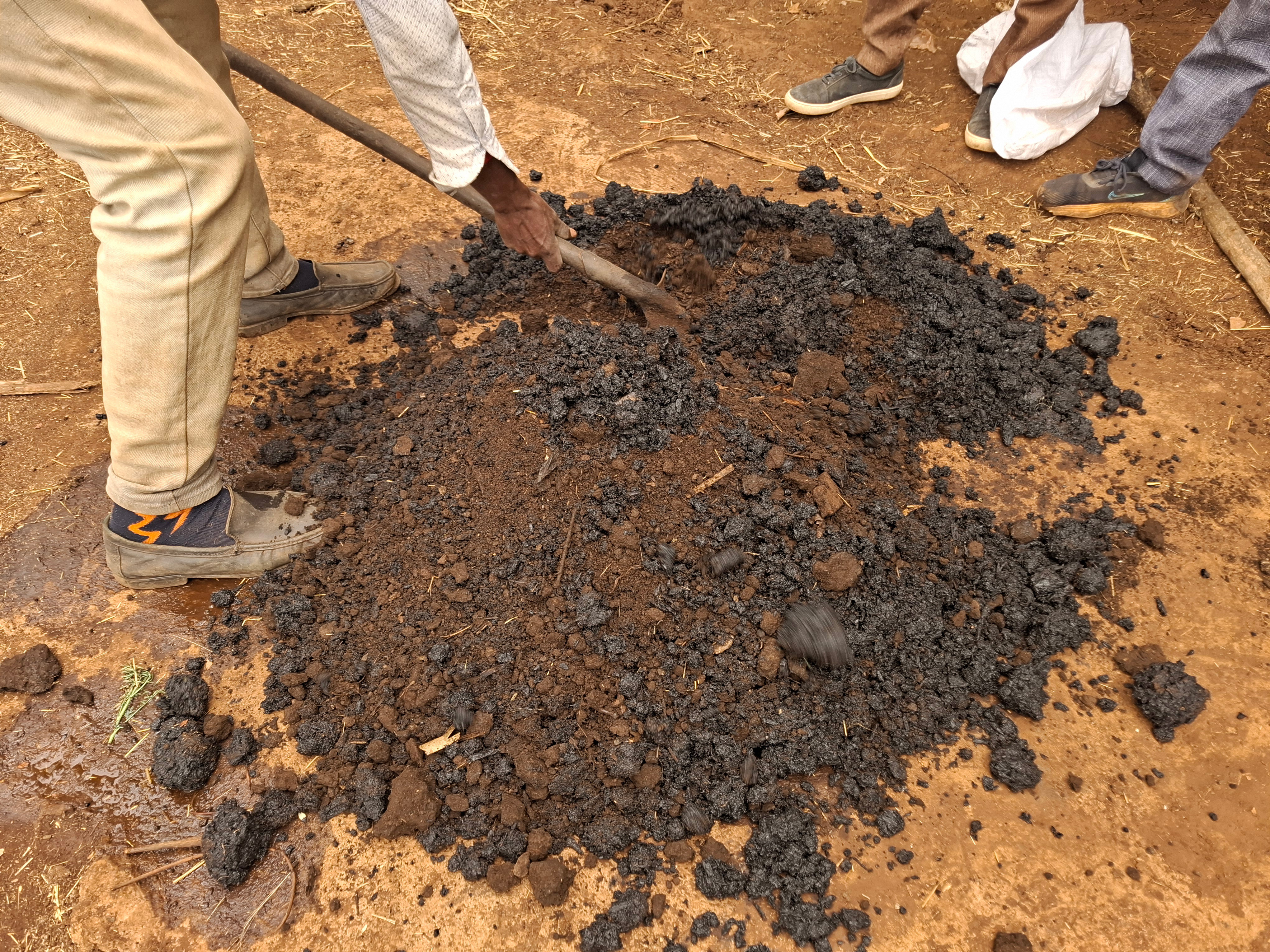
For decades, Ethiopia’s agriculture has been geared towards the use of imported synthetic fertilisers. It is only since Russia’s aggression against Ukraine that significant changes have been resolutely pursued in the Oromia region. In particular, the integrated soil fertility management practices implemented with German funding have demonstrated that green manuring and vermicomposting of organic waste are possible all year round. Biochar is now replacing expensive lime in the highlands, retaining nutrients in the soil despite periods of heavy rainfall and promoting humus formation. Against this backdrop, the successes of the project – coordinated by the DBFZ and funded by the Federal Ministry for Economic Cooperation and Development (BMZ) – are supporting a national shift towards nutrient recycling through the domestic production of organic fertilisers from waste materials, and are ensuring greater autonomy and resilience for smallholder farming structures and food production. Encouraged by the project’s results, the Oromia Regional Government began in 2025 to apply the techniques for the production and use of biochar-based fertilisers (PbD) in other German, European or World Bank-funded projects on soil fertility.
The proceeds from the first sale of carbon sink certificates in Ethiopia are currently being paid out to the nearly 300 smallholder farmers taking part. For the carbon sinks established by 2025, they will receive an average of 1,700 ETB (Ethiopian birr), which is roughly equivalent to one-third of an unskilled worker’s monthly wage. The costs of training, as well as accurate data collection, quality control and auditing, are also covered by proceeds from the sale of Artisan C-Sink certificates. However, the majority (at least 60 per cent) goes to the participating smallholder farmers. Through carbon sequestration in the soil, they make a significant contribution to climate protection. From the perspective of individual farms, these payments, combined with increased agricultural yields and the savings on the use of synthetic fertiliser, add up to a compelling benefit.
According to the scientists involved in the project in Germany and Ethiopia, PbD can at least serve as an effective substitute for synthetic fertiliser in terms of crop yields. In the ETH-Soil pilot regions, on heavily degraded land (totalling approx. 31 ha), yield increases of between 11 and 30 per cent were achieved for established cereal varieties (wheat, barley, maize, teff) and of between 9 and 68 per cent for beans and potatoes, compared with the conventional use of synthetic fertiliser. On acidified soils (pH values around 5 in the Kofele district), a significant improvement in soil pH values (to 5.8–5.9) is attributable to the liming effect of the alkaline biochar. By contrast, humus formation (soil carbon content) and improved phosphate availability are attributable to the porous structure of biochar. Like a sponge, this material retains nutrients where they would otherwise be leached away by heavy rainfall.
Further information: www.eth-soil.com
Smart Bioenergy – innovations for a sustainable future
The DBFZ works as a central and independent thinker in the field of energy and material use of biomass on the question of how the limited available biomass resources can contribute to the existing and future energy system with sustainability and high efficiency. As part of the research the DBFZ identifies, develops, accompanies, evaluates and demonstrates the most promising fields of application for bioenergy and the especially positively outstanding examples together with partners from research, industry and public. With the scientific work of the DBFZ, the knowledge of the possibilities and limitations of energy and integrated material use of renewable raw materials in a biobased economy as a whole should be expanded and the outstanding position of the industrial location Germany in this sector permanently secured – www.dbfz.de/en.