Anaerobic fermentation
During fermentation, the processed biomass is broken down by microorganisms in a controlled process carried out in the absence of oxygen and at a suitable temperature. In the process, some of the organic matter contained in the biomass is converted into biogas, a mixture consisting mainly of methane (CH4) and carbon dioxide (CO2). This anaerobic digestion is a proven technology used worldwide for both energy production and the treatment of organic waste streams. The resulting biomethane can be used in a variety of ways, for example as compressed natural gas (CNG), as liquefied natural gas (LNG), for injection into the gas grid, or for decentralised combined heat and power (CHP). In addition to energy, a solid residue is produced, known as digestate, which can be used as fertiliser or further processed.
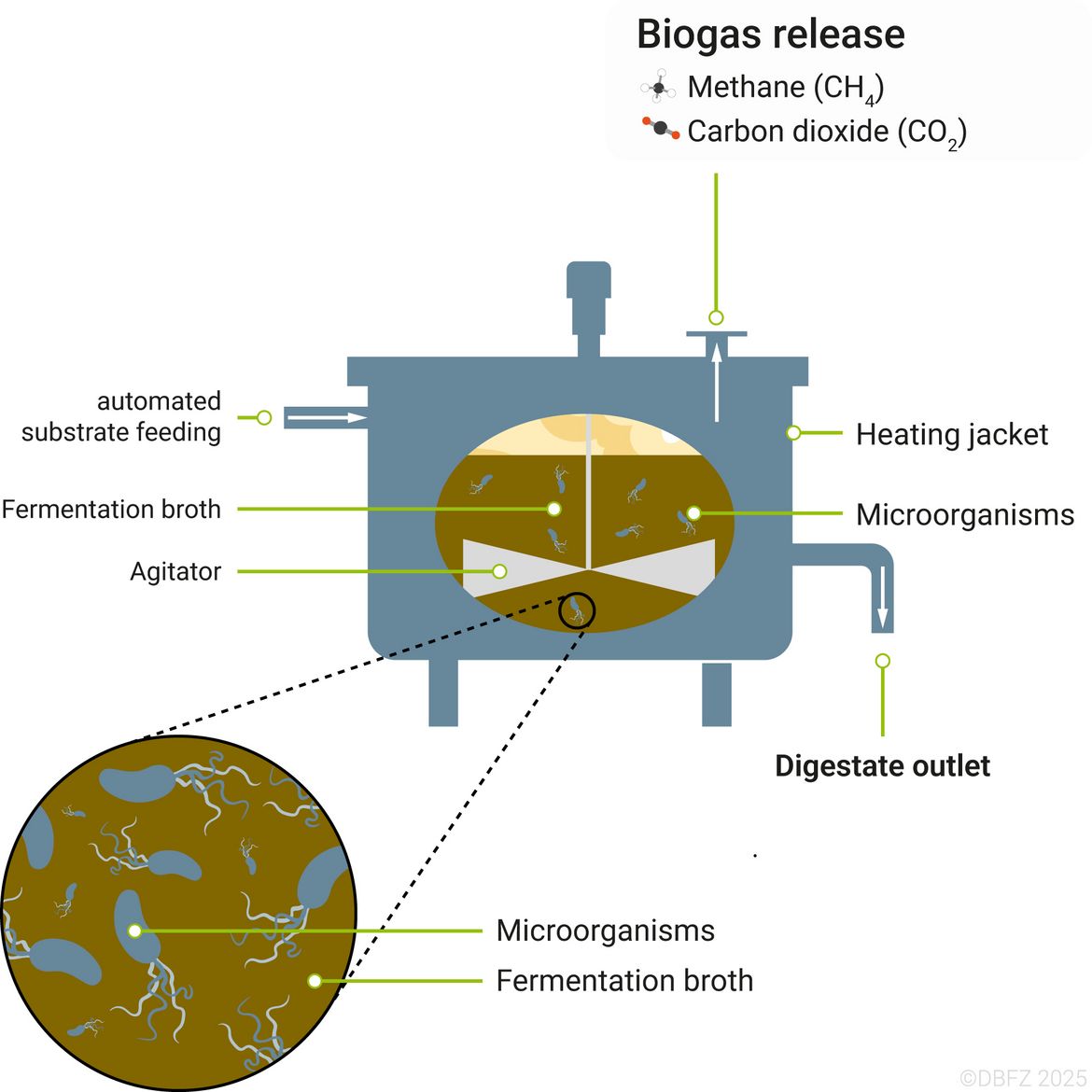
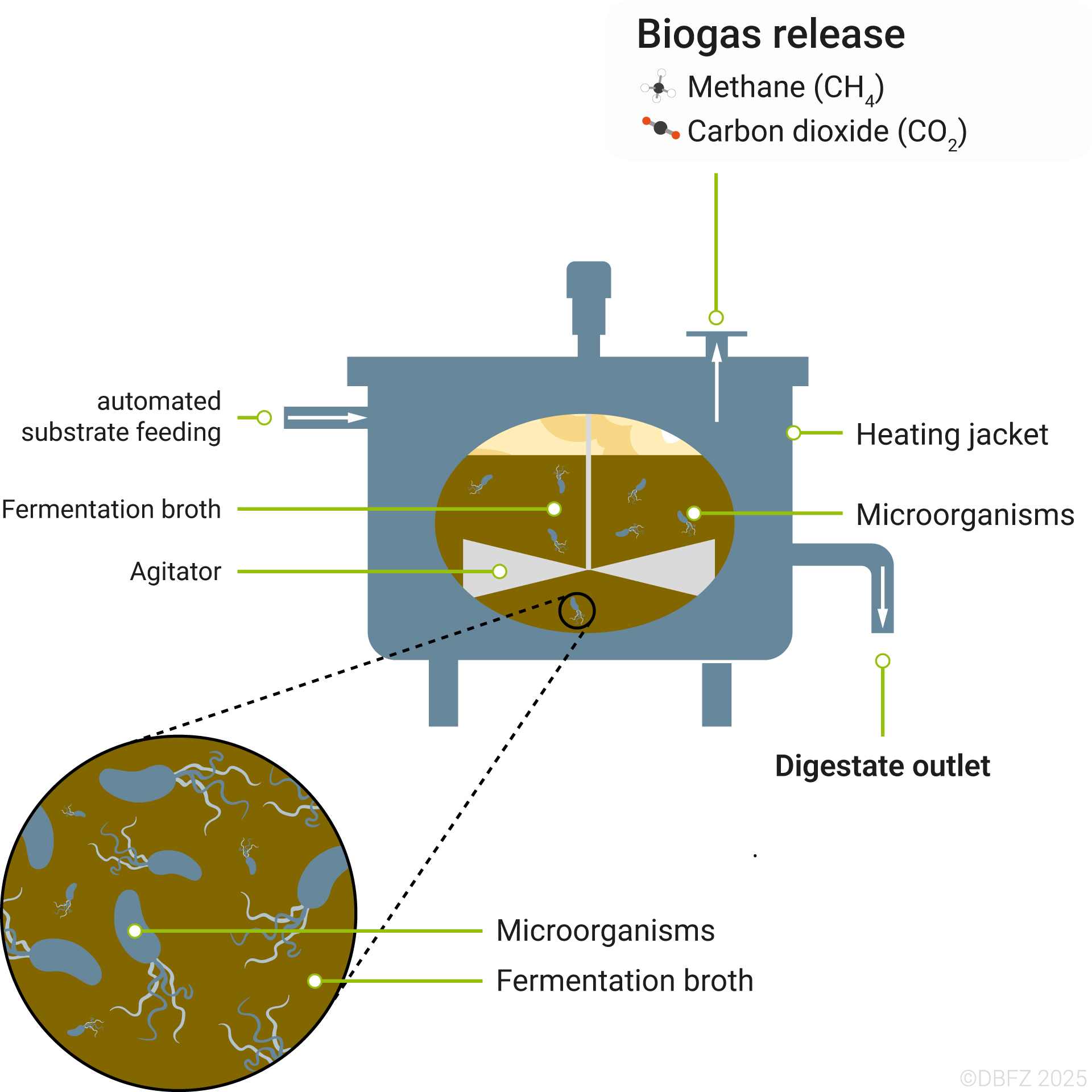
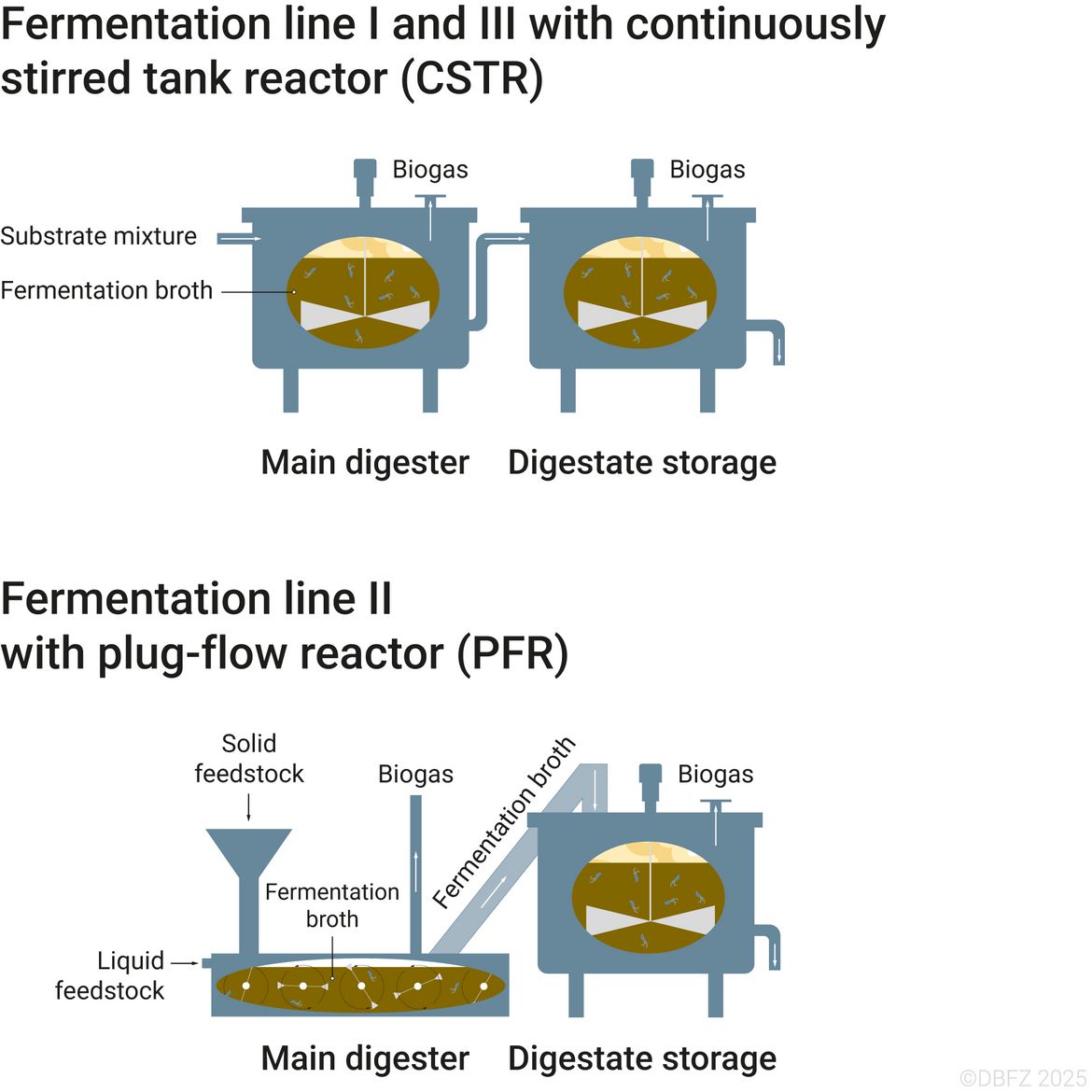
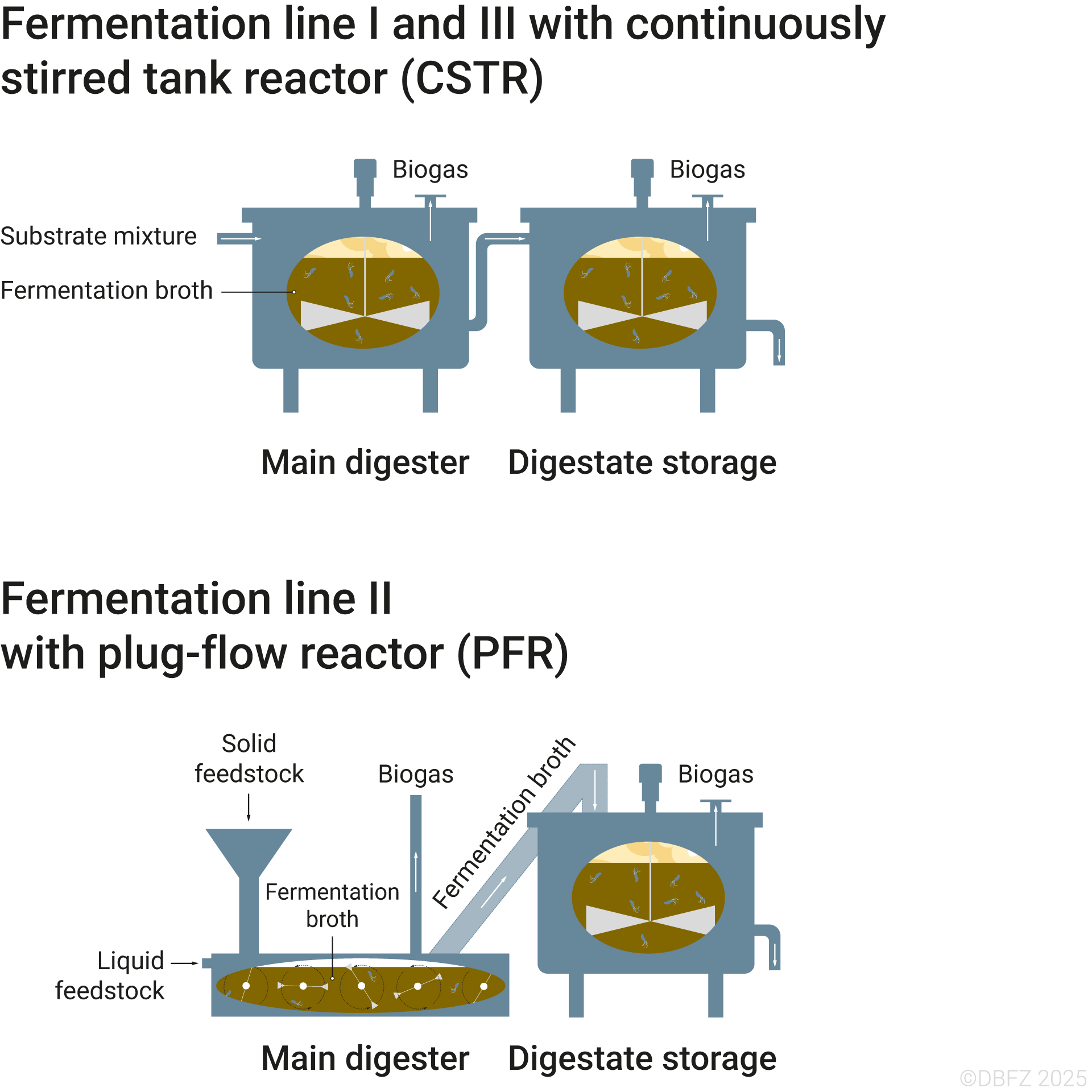
To this end, the research and demonstration platform comprises three separate fermentation lines, each with three fermenters. These are modular in design and can be operated either in series or in parallel to simulate different process stages or carry out parallel investigations. The reactor lines differ in particular in the first process stage, their mode of operation and the maximum dry matter content of the substrates used. One line uses a continuously operated stirred tank reactor (CSTR) – as is common in agricultural applications – which is suitable for pumpable substrates with a dry matter content of up to 15%. A second line uses a plug flow reactor (PFR) in the first stage, as is frequently employed in the treatment of organic waste, and can process substrates with dry matter contents of up to 45%. The second and third process stages are designed as stirred tank reactors in both cases. A total of five CSTRs and one PFR are available, mounted on separate frames and capable of being flexibly combined with one another.
This technical configuration enables a direct comparison of reactor systems, biogas quality and quantities at each fermentation stage, as well as the influence of pre-treatment processes—such as hydrothermal treatment—on the substrates. Furthermore, methane yield can be assessed in detail across the individual process stages under varying process parameters. The flexibility of the platform allows for the systematic investigation of different substrate pre-treatments, process temperatures, additives, and new organic substrates or substrate combinations. Taking economic and environmental aspects into account, the analysis of methane yields across all process stages serves as the basis for process optimisation, scaling, and the determination of suitable operating points.
Technical Details
Reaktorlinien
5 identical continuously stirred-tank reactor reactors (CSTR) 1 plug flow reactor PFR)
Reactor line 1 in series with main digester (CSTR) and post digester (CSTR)
Reactor line 2 in series with main digester (PFR) and post digester (CSTR)
Reactor line 3 in series with main digester (CSTR) and post digester (CSTR)
Volume: CSTR 1000 l, PFR 500 l
Material: Stainless steel (V2A)
Internal pressure (rel.): –15..15 hPa
Temperature: 25–70 °C