Our speakers at DOC2026
Here you will find the speakers overview of this year's Doctoral Colloquium.

Gomez, Czaneil C.
When carbon counts differ: The complexities of biogenic carbon accounting in BECCUS and why accounting choices matter
(23 September 2026 | 13:45)
This presentation explores how different BECCUS carbon accounting frameworks can yield different outcomes even when assessing the same system. It highlights how goals, boundaries, methodologies, and baselines shape results and calls for better alignment of existing methodologies to ensure that BECCUS carbon accounting accurately reflects atmospheric outcomes and supports credible climate mitigation.
Gumpert, Felix
Enzyme-Assisted Solubilisation of Secondary Sludge for Improved Anaerobic Digestion
(23 September 2026 | 13:45)
The targeted pre-treatment of excess sludge from municipal wastewater treatment using enzymes and surfactants in a slightly alkaline environment at 50°C offers several advantages in the subsequent anaerobic sludge stabilisation process. The pre-treatment reduces viscosity and dissolves up to 50% of the COD. This results in faster and more efficient conversion of organic matter into biogas.

Erofeev, Yury
Reconciling Aviation GHG Calculators for SAF-Aware Scope 3 Reporting: Evidence from Real Flights
(23 September 2026 | 14:15)
Aviation GHG calculators can disagree up to fourfold on the same flight — driven mainly by non-CO₂ treatment and reporting scope, not emission factors. At routine SAF blends, the fuel-switch benefit is invisible against this noise; only full substitution moves it. We propose a minimal, auditable SAF overlay so Scope 3 aviation reporting can finally compare like with like.

Dr. de Oliveira Laurin, Maria
Low-carbon Aviation Transition: The Cross-sectoral Role of Biomass Availability in Global Energy Systems
(23 September 2026 | 14:45)
Aviation is one of the hardest sectors to decarbonize and will remain reliant on liquid fuels for decades. This presentation shows how sustainable aviation fuels (SAF) can drive aviation’s low-carbon transition, while highlighting that biomass scarcity and competition with other sectors might shape SAF deployment. The key insight is that aviation must be analyzed from a system-wide perspective.
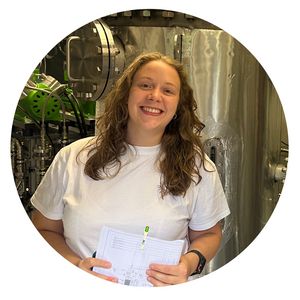
Laux, Anika
From Surplus Electricity to Biomethane: Commissioning of a Pilot-Scale Biological Methanation System for Biogas Upgrading
(23 September 2026 | 14:45)
The presentation will give insights into the commissioning of a pilot-scale biological methanation plant, where hydrogen from electrolysis and CO₂ from biogas are converted into biomethane by archaea in thermophilic trickle-bed reactors. Reactor configuration as well as first results on CH₄ purity and H₂ conversion efficiency will be presented.

Höninger, Marvin
Force Yield 2 - An advanced microbial platform for high-yield production of biochemicals from agricultural sidestreams
(23 September 2026 | 15:15)
The transition toward a sustainable bioeconomy requires the efficient utilization of renewable and non-food biomass. Within the Force Yield 2 (FY2) project, we focus on the valorization of diverse second-generation feedstocks as alternative carbon sources for industrial biotechnology. These substrates, derived from lignocellulosic residues, reveal significant variability in composition, posing challenges for robust and scalable bioprocesses.
In Force Yield 2, genetically engineered Corynebacterium glutamicum strains were developed to enable efficient xylose utilization, a five-carbon sugar component of lignocellulosic hydrolysates. The engineered strains are designed for the production of industrially relevant compounds. Own research focuses on Chassis engineering and its application on amino acids.

Peroni, Pietro
Regional-scale modelling of miscanthus phytomanagement in contaminated marginal lands under biostimulants application: above-ground biomass production and Nickel uptake
(24 September | 10:15)
This study evaluates the long-term potential of Miscanthus × giganteus to couple biomass production and soil restoration in metal-contaminated and geogenically Ni-enriched soils in Emilia–Romagna (Italy). By integrating soil–plant metal dynamics and biostimulant effects into a process-based crop model, it improves predictions of phytomanagement performance, particularly with respect to Ni uptake.

Ender, Tommy
Development and testing of a mesophilic aerobic biofilm process for treating process water from the hydrothermal carbonization (HTC) of sewage sludge
(24 September 2026 | 10:15)
A mesophilic trickling filter robustly treated diluted HTC process water from sewage sludge at OLRs up to 43 kg COD m⁻³ d⁻¹, achieving high removal of TOC, VFAs and NH₄-N. 16S rRNA sequencing confirmed a PW-adapted, predominantly chemoheterotrophic biofilm, while refractory organics remained.

Orth, Fabian
Utilization of lignocellulose-rich substrates for biogas and fiber, or cellulose extraction using innovative processes
(24 September | 10:45)
I am a doctoral researcher at the University of Hohenheim, specialising in bioenergy and renewable resources. I hold an M.Sc. in Agricultural and Resource Economics from Justus Liebig University Giessen and a B.Sc. in Agricultural Sciences with a focus on agribusiness from the University of Göttingen. I combine academic expertise with practical experience in agriculture.
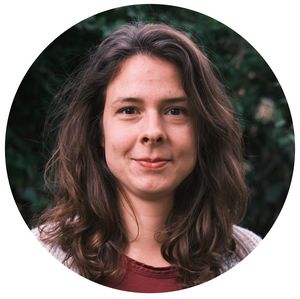
Deutscher, Antonia
Pretreatment of Residual Biomass for Activated Carbon Production in Wastewater Treatment
(24 September 2026 | 10:45)
I completed my B.Sc. in Forestry at the University of Göttingen from 2017 to 2021, followed by an M.Sc. in Environmental Data Analysis and Modelling from 2021 to 2024. Since 2024, I have been a PhD researcher in the bio4act research group. My research focuses on data analysis and biomass assessment.
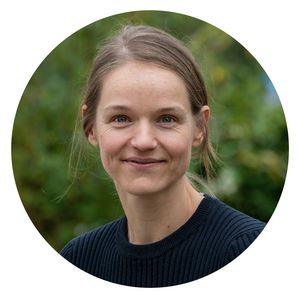
Bothe, Sophia
Real Data Life Cycle Assessment of Sustainable Sugar Beet Cultivation – A Case Study for Central Germany
(24 September 2026 | 11:15)
As the leading sugar crop in Germany and Europe, sugar beet is primarily cultivated for food sugar production. Yet, increasing sustainability in beet cultivation remains a key challenge, as conventional systems are resource-intensive and associated with significant environmental impacts. To address these issues, the study explores strip-tillage combined with banded fertilizer placement, and cover cropping. The dataset is based on a three-year on-farm field trial in Saxony-Anhalt, Germany, offering empirical data for LCA modeling of agricultural systems.

Del Frari, Fabrizio
Towards Data-Efficient Trained Modelling for Biomass Upgrading: A Reduced-Order Model for Hydrodeoxygenation Continuous Reactors
(24 September 2026 | 11:15)
This research aims to improve the hydrodeoxygenation (HDO) process by developing a reduced-order model (ROM) enhanced with machine learning. The framework combines physics-based modeling and data-driven techniques to enable advanced process control, parameter estimation, digital sensing, and real-time data acquisition, providing the foundation for a reliable and scalable Digital Twin.
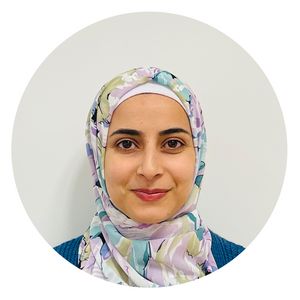
Allahseh, Duaa
Aspen plus simulation of a Biogas-Driven hybrid HAT-PEMFC and Heat Pump systems for Building heating applications
(24 September 2026 | 11:45)
This presentation investigates a hybrid heating system combining a high-temperature PEM fuel cell and a heat pump for efficient and low-carbon building heating. It highlights system integration and thermodynamic performance, demonstrating how hybrid energy systems can improve efficiency, reduce emissions, and enhance operational flexibility.
Füchsl, Stefan
The Climate Impact of Biogenic Carbon in Life Cycle Assessment: A new Framework and Application
(24 September 2026 | 11:45)
Biogenic carbon is not climate neutral, with several new methods having been developed to assess the climate impact of biogenic carbon. The newly presented GCC Framework seeks to formalize the assessment of biogenic carbon from wood. Its application shows that both strongly positive and negative climate impacts are possible for the utilization of biogenic carbon from wood.

Schenker, Marc
The SynergyFuels Plant - Material and Energetic Assessment of a Novel Biorefinery Concept
(24 September 2026 | 13:45)
The talk presents an innovative biomass refinery concept producing the whole portfolio of drop-in fuels. The aim is to integrate three different thermo-chemical and biochemical process routes to boost material and energetic efficiencies. Experimental data for individual process steps are used as inputs for process simulations in Aspen Plus allowing detailed material and energetic assessment.
Nieß, Selina
Direct biogas methanation in a single-step fixed bed reactor with Ni- and Ru-based catalysts
(24 September 2026 | 14:15)
The presentation will cover recent lab tests demonstrating that combining Ni or Ru with Al2O3 or CeO2 has distinct effects on direct biogas methanation. Temperature and the H2/CO2 ratio are critical drivers of catalyst performance. Catalysts with low-temperature activity and enhanced H2S tolerance enable a single-step methanation with a product gas suitable for use as a transportation fuel.
Ströhmberg, Susanna
Heatpipe-cooled catalytic methanation as a pathway for flexible biogas plant operation
(24 September 2026 | 14:15)
How can biogas plants become more flexible and help store surplus renewable electricity? This presentation introduces the H2BioMeth project, which combines catalytic methanation with SOEC electrolysis. It highlights the heatpipe-cooled reactor concept and uses simulation results to show which process conditions are crucial for scale-up and producing grid-quality methane.

Konnerth, Philipp
Unraveling the economic Hot-Spots along the Furandicarbox-ylic acid (FDCA) value chain
(24 September 2026 | 14:45)
Early-stage biobased FDCA production via electro-oxidation of HMF must be evaluated techno economically. Using Aspen simulation and TEA, this work shows that the FDCA MSP drops strongly with scale up, depends sensitively on HMF concentration and energy costs, and can be further reduced by co-producing and co-valorizing green hydrogen.

Mensah, Isaac
Comparative physicochemical and thermogravimetric characterisation of three RDF blends: identifying an optimal feedstock for gasification
(24 September 2026 | 14:45)
The presentation investigates the physicochemical and thermal characteristics of different refuse-derived fuels (RDFs) blends sourced from a pilot waste-to-energy plant in Ghana to assess their suitability and identify the most promising RDF blend for gasification applications.

Lima Garção, Maria Isabella
Scale-Up of a Two-Stage Anaerobic Digestion System: Challenges and Economics
(24 September 2026 | 15:15)
Chemical Engineer and PhD candidate at the University of Hohenheim. Research focused on constructing and optimizing a pilot-scale two-stage anaerobic digestion plant to boost methane output from manure.

He, Ben
Development of a two-step continuous process for reductive catalytic fractionation of lignocellulosic biomass into aromatic compounds
(24 September 2026 | 15:15)
I'm currently developing a two-step catalytic fractionation process for biomass to obtain high-value aromatic from Msicanthus. By this process, lignin is converted into phenolic monomers, while cellulose and hemicellulose are retained in solid form and can be further converted into bioethanol via hydrolysis and femrmentation.